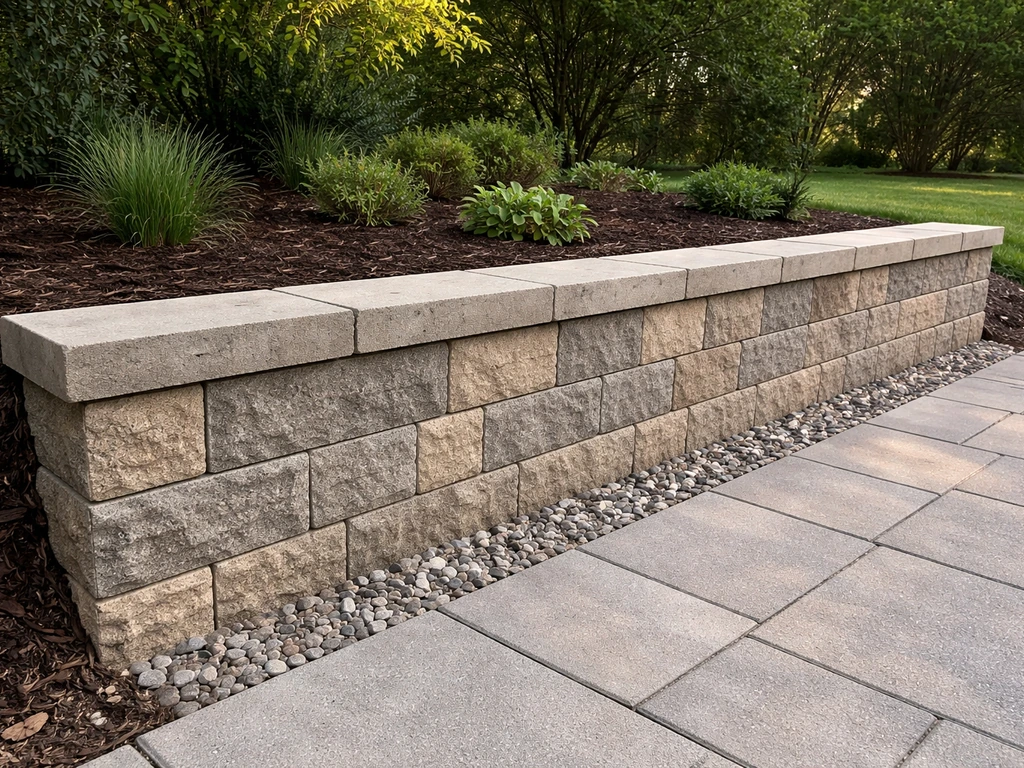
You can absolutely build a small retaining wall for a patio yourself, as long as the wall stays under 3 to 4 feet tall, you prep the base properly, and you install drainage behind it. Most DIYers choose segmental concrete blocks (the interlocking kind you find at any home center) for walls up to about 3 feet, or stacked-stone or timber for shorter walls under 2 feet. The key steps are: excavate and compact a gravel base, set your first course perfectly level, stack each course with a slight backward lean (batter), backfill with clean gravel, and add a perforated drain pipe at the base. For a patio retaining wall, keep the key focus on drainage, correct base prep, and proper block placement so the wall holds up for years how to build a patio retaining wall. Skip any of those and you'll be rebuilding in 3 years. Follow them and your wall will outlast your patio.
How to Build a Small Retaining Wall for a Patio DIY Guide
Can you really DIY this? Deciding on wall type and your limits
For most homeowners, a retaining wall under 3 feet tall is a solid weekend project. Once you push past 3 feet, and especially past 4 feet, things get complicated fast: soil pressure increases, engineering matters more, and permits almost certainly come into play. In most U.S. municipalities that follow the International Residential Code, walls up to 4 feet (measured from the bottom of the footing to the top of the wall) are generally exempt from building permits, provided the wall isn't supporting a heavy surcharge like a driveway or structure. Portland, OR and Oakland, CA both use that 4-foot threshold, while some jurisdictions like parts of Fairfax County, VA require permits for walls retaining more than 3 feet of earth. Check your local building department before you dig anything.
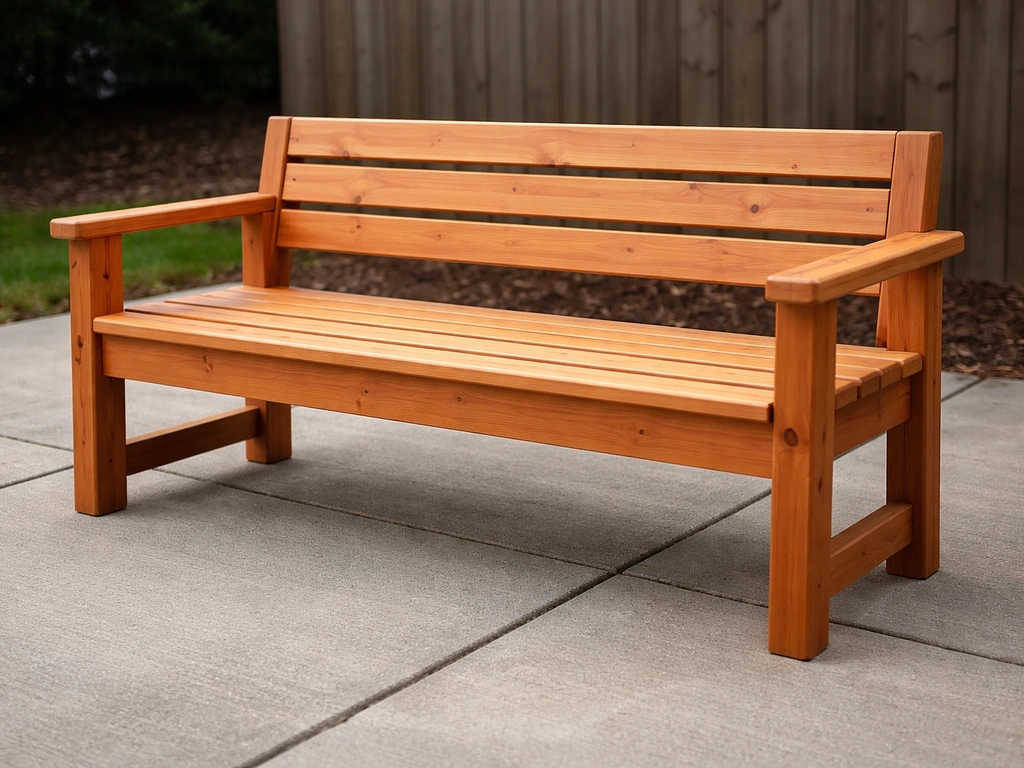
Practically speaking, 2 to 3 feet is the sweet spot for a confident first-time DIYer. At that height, a well-built segmental block wall is completely manageable without engineering. If your grade change is more than 4 feet, consider terracing it with two shorter walls separated by a flat bench of soil rather than attempting one tall wall. That approach is safer, usually doesn't require a permit, and looks better with landscaping anyway. Once your patio retaining wall is stable, you can incorporate a bench along the wall for comfortable outdoor seating build a patio wall bench.
Here's a quick comparison of the three most common small retaining wall options for patio projects:
| Wall Type | Best Height Range | Skill Level | Typical Cost (materials) | Pros | Cons |
|---|---|---|---|---|---|
| Segmental concrete block | Up to 3 ft | Beginner to intermediate | $15–$30 per sq ft of wall face | Widely available, consistent sizing, built-in batter, no mortar needed | Heavy to handle, limited aesthetic range |
| Treated timber (6x6 landscape ties) | Up to 2 ft | Beginner | $10–$20 per sq ft of wall face | Easy to cut, beginner-friendly, budget option | Shorter lifespan (10–20 yrs), needs deadman anchors |
| Natural stacked stone (dry stack) | Up to 2 ft | Intermediate | $20–$40 per sq ft of wall face | Beautiful, blends naturally, no mortar | Labor-intensive, requires good stone selection and patience |
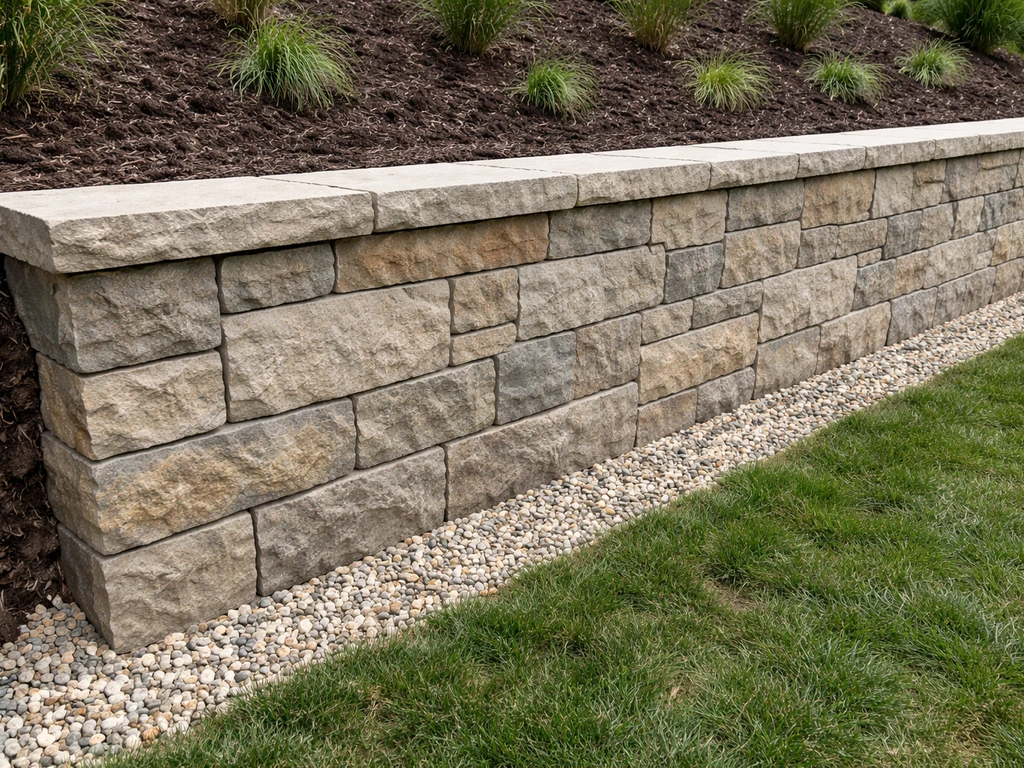
For most patio-adjacent retaining walls, segmental block is the best choice. It's predictable, available everywhere, and the geometry is already engineered for you. That's what this guide focuses on, though the base prep and drainage steps apply to all three types.
Measure, plan your layout, and read the site
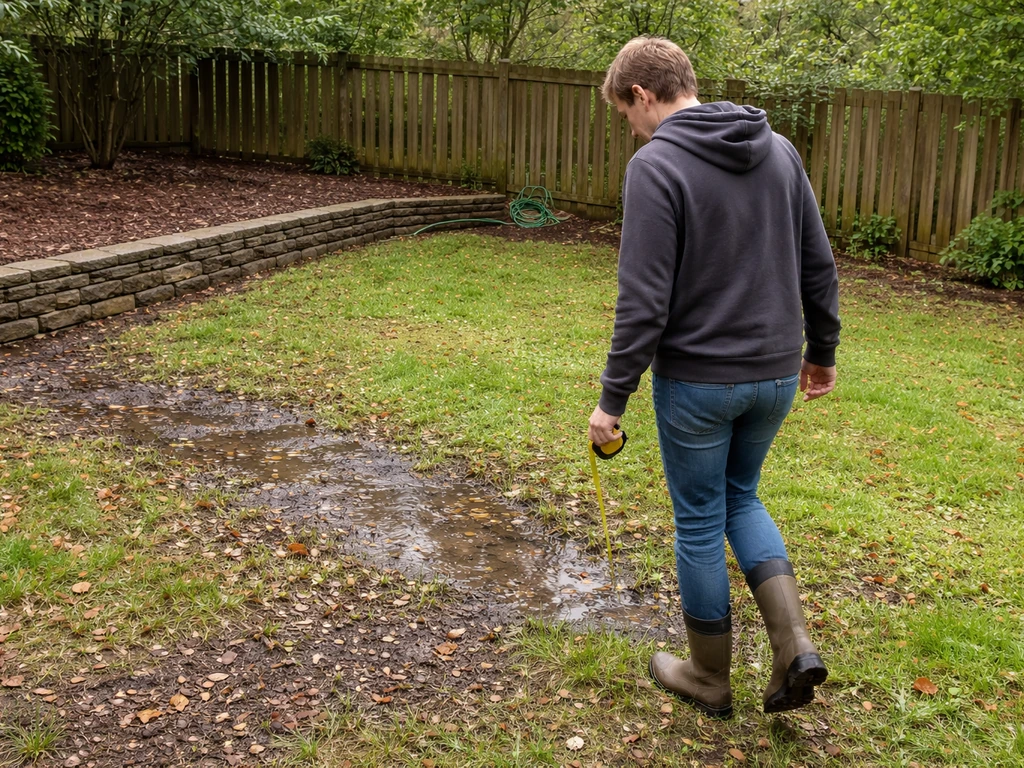
Before you order a single block, spend an hour measuring and looking at your site carefully. The measurements that matter most are: the height of the grade change (how far the soil needs to be held back), the total length of the wall, and the slope of the ground behind the wall. Use a line level or a 4-foot level with a straight board to measure the vertical drop across your site. That drop tells you how tall your wall needs to be.
Next, think about drainage. Walk your yard during or right after a heavy rain if you can. Where does water collect? Where does it flow? Retaining walls trap water behind them, and if you don't give that water somewhere to go, it builds up hydrostatic pressure that will push your wall over in a few seasons. Note whether your soil is mostly clay (slow-draining, high pressure risk) or sandy/loamy (drains faster, lower risk). Clay soil is the most common reason retaining walls fail.
Also think about what's above and behind the wall. A lawn with foot traffic is a low surcharge. A parked car, a second story deck, or a loaded garden bed sitting close to the top of the wall adds significant extra pressure. For anything beyond a simple lawn behind the wall, build conservatively or consult an engineer.
- Measure the vertical height of the grade change at several points along the wall's run
- Mark the wall's footprint with spray paint or stakes and string line
- Identify the uphill direction and any natural drainage channels nearby
- Probe the soil with a rod or screwdriver: hard resistance within 12 inches suggests rock or hardpan (good); soft, wet, or shifting soil needs extra attention
- Check for underground utilities before digging: call 811 (USA) at least 3 business days before you excavate
- Confirm your local permit threshold with one quick call to your building department
Materials and tools you'll need
Here's what you'll need for a standard segmental block wall up to 3 feet tall. Quantities depend on your wall dimensions, but this is the complete list so you're not making three trips to the store.
Materials
- Segmental retaining wall blocks (standard size is roughly 12 in wide x 4 in tall x 8 in deep, weighing 30–80 lbs depending on the block): calculate face square footage (length x height) and check manufacturer coverage specs
- Cap blocks for the top course (same brand/system as your wall blocks)
- Crushed stone (3/4-inch clean crushed gravel, also called 'clean crush'): at least 6 inches deep for the base, plus enough to backfill the drainage zone behind the wall
- Road base or compactable gravel for the trench base layer if needed
- Geotextile landscape fabric (also called filter fabric): to line the drainage zone behind the wall, not for weed control
- 4-inch perforated drain pipe (flexible corrugated or rigid PVC): runs the full length of the wall at the base
- Construction adhesive rated for retaining walls (for the cap blocks and any cut blocks)
- Coarse sand (optional, for fine-leveling the base course)
Tools
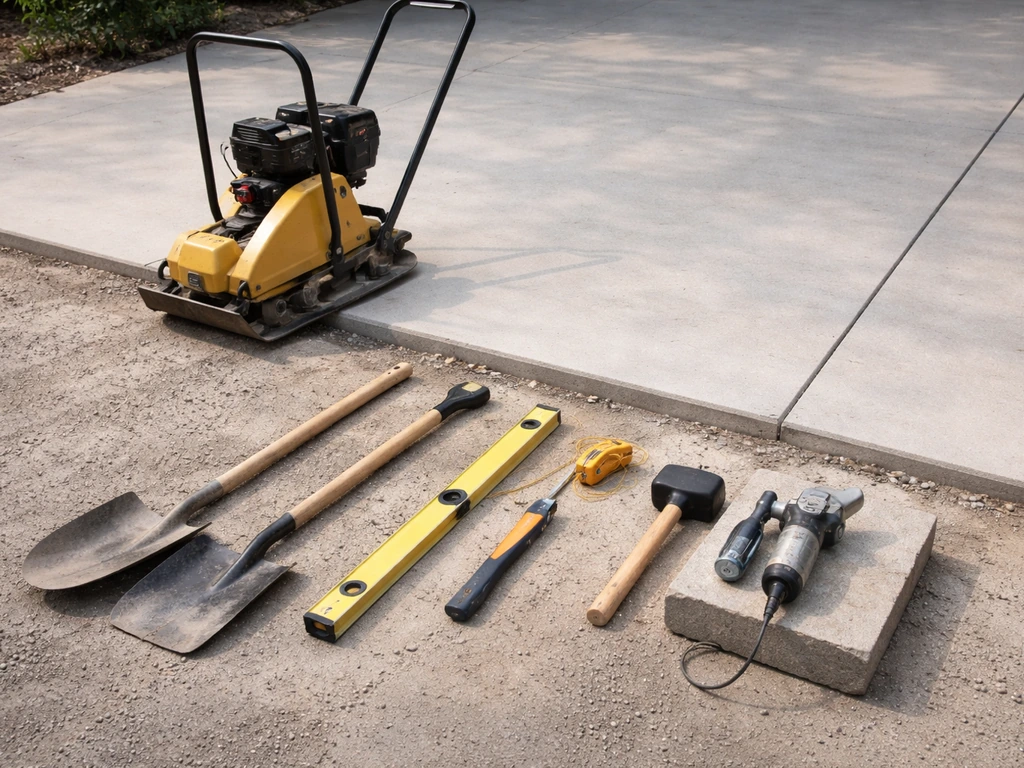
- Spade shovel and flat-blade shovel
- Plate compactor (rent for around $60–$90/day, well worth it)
- 4-foot level and a line level with string
- Rubber mallet
- Tape measure
- Chisel and hand sledge or a circular saw with a diamond masonry blade (for cutting blocks)
- Wheelbarrow
- Tamping rod or hand tamper for tight spots
- Work gloves and safety glasses
- Knee pads (you'll thank yourself)
Budget estimate for a 20-foot-long wall that's 2 feet tall: expect to spend roughly $400 to $800 on materials, depending on your block choice and local stone prices. Renting a plate compactor adds $60 to $90. If you go with timber instead of block, materials drop to around $200 to $400 for the same wall, but you'll need 10-inch galvanized spikes and deadman anchors cut from the same lumber. If you have your heart set on a wood option, focus on pressure-treated lumber, proper anchors, and a drainage plan similar to a block wall timber instead of block.
Excavation and base preparation
This is the most important part of the whole project. A beautiful wall on a bad base will fail. A plain wall on a perfect base will stand for decades. Do not rush this step.
Start by digging your trench. The front of your trench should be where the face of the wall will sit, and you need to dig deep enough to bury the first course of block entirely. The rule of thumb is to bury one inch of block for every foot of exposed wall height, with a minimum of 6 inches buried for any wall. So for a 2-foot-tall wall, bury the bottom 2 to 3 inches minimum; for a 3-foot wall, bury 3 to 4 inches. The total trench depth also needs to accommodate your gravel base, which should be at least 6 inches of compacted 3/4-inch crushed stone.
Dig the trench flat and consistent in depth along the full run. This is where a level and string line earn their keep: set a string line at your target grade and work to it. Once the trench is dug, add 6 inches of clean crushed gravel. Spread it evenly and compact it thoroughly with the plate compactor. Make at least two passes. The gravel should feel like pavement when you're done. If it still shifts under foot, compact more. This compacted gravel base does two jobs: it gives the wall a stable, non-settling foundation, and it lets water drain away from the bottom of the wall.
After compacting the gravel base, take the time to screed it flat with a board and check it with your level in multiple directions. If one section is 1/4 inch low, add a bit of coarse sand there to fine-tune. The effort you put in here means every course above will go faster and sit properly.
Geotextile fabric goes against the native soil at the back of the excavation, not on top of the gravel. Think of it as a sock that keeps your clean drainage gravel from getting contaminated with fine soil particles over time. Lay it so it extends up behind where the wall will sit, and you'll fold the top edge over the gravel backfill before covering with topsoil at the end.
Building the wall: first course through cap
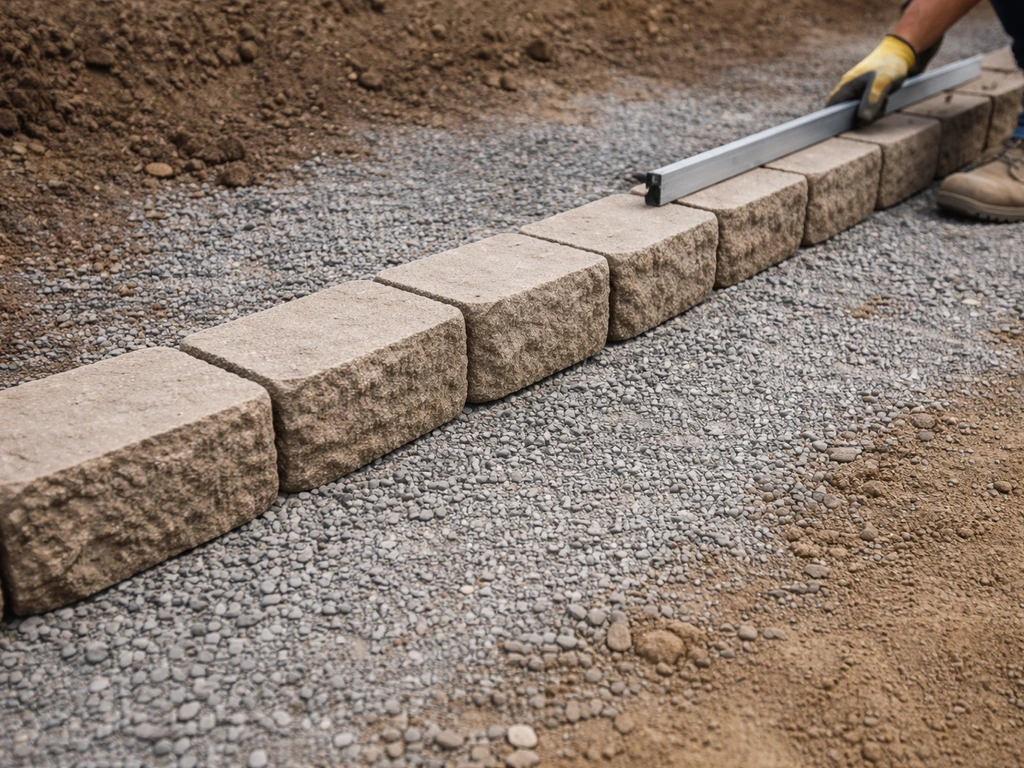
Your first course is entirely buried or at least flush with the ground at the wall's low side. Set each block flat and firm on the compacted gravel, and check every single block for level in both directions (front-to-back and side-to-side) with your 4-foot level. Tap blocks into adjustment with a rubber mallet. Do not skip this: if the first course is off by even half an inch over 20 feet, that error compounds as you stack and your top course will visibly slope.
Most segmental block systems are designed with a slight backward angle, called the batter, built into the block geometry. When you stack them, the wall automatically leans back into the hill by about 1 inch per foot of height. This backward lean is critical because it shifts the wall's center of gravity back toward the retained soil, dramatically improving stability. Don't try to make the wall perfectly vertical thinking it looks better. Follow the block manufacturer's system.
Stacking the courses
- Set the first course fully level on the compacted gravel base, buried to the appropriate depth
- Stagger the joints: each course should be offset by half a block length from the course below, just like bricklaying
- Check level and alignment with a string line at the front face of the wall every course
- Before laying each new course, sweep loose debris off the tops of the blocks below
- On curves or corners, cut blocks to fit using a diamond blade saw or score-and-snap with a chisel
- As you build up, add drainage gravel behind the wall in lifts, compacting lightly with a hand tamper as you go
- Do not use a plate compactor directly against the back of the wall on higher courses: it can shift blocks out of alignment
- Apply construction adhesive under cap blocks on the final course and press them firmly into place
If your wall turns a corner or curves around a patio edge, plan that geometry before you start laying. Segmental block systems typically have corner blocks and instructions for running curves. A gentle curve actually adds rigidity to a wall, while a sharp 90-degree corner requires careful staggering so blocks interlock across the corner.
Backfill, drainage, and getting water to flow the right way
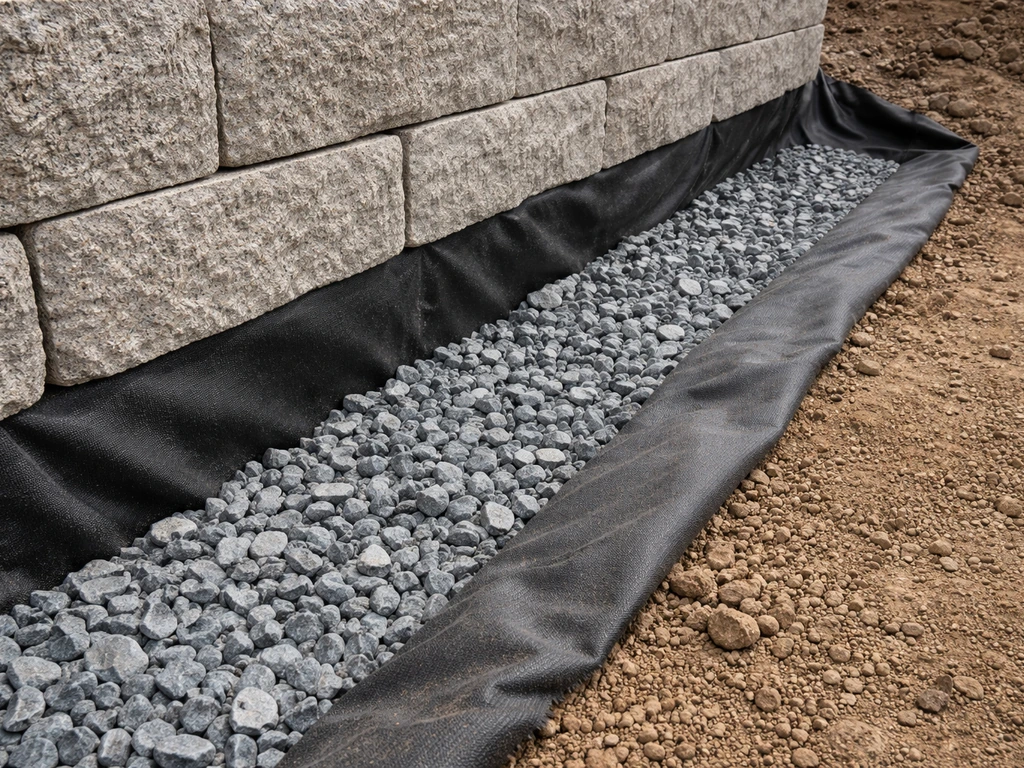
This is the step most DIYers shortcut, and it's the most common reason retaining walls fail within a few years. Proper drainage removes the hydrostatic pressure that builds up when water saturates the soil behind the wall. Without it, that water has nowhere to go but forward, and it will push your wall out over time.
At the base of the wall, right behind the first course of block, lay your 4-inch perforated drain pipe in the gravel. The perforations face down. Wrap the pipe and surrounding gravel with geotextile fabric to keep soil from clogging it. The pipe should slope at least 1 inch per 8 feet toward one or both ends of the wall, where it exits to daylight or into a catch basin. Do not cap the ends. Water needs a way out.
Behind the drain pipe and extending up behind the wall, backfill with clean crushed gravel (the same 3/4-inch material you used for the base). Fill this drainage zone in 6- to 8-inch lifts and compact each lift with a hand tamper. Keep the gravel zone at least 12 inches wide behind the blocks. Only after you reach within 12 inches of the top of the wall do you transition to topsoil or native fill for planting.
For walls using solid blocks without gaps, you can also chip out or leave a small gap in every third or fourth block in the first course as an informal weep hole. This lets any water that does build up behind the wall escape through the face rather than building pressure. It's a secondary measure, not a substitute for the drain pipe, but it helps.
Compact native soil backfill in lifts of no more than 6 to 8 inches. Use a hand tamper near the wall (within 3 feet) and the plate compactor further back. Do not dump all the backfill in at once and compact from the top: that creates uneven pressure and can shift the wall.
Caps, steps, and tying the wall into your patio
Cap blocks finish the top of the wall with a clean, smooth surface and add a surprising amount of visual polish. Most segmental block systems offer matching caps. Glue them down with construction adhesive rated for masonry and exterior use. Let the adhesive cure for 24 hours before anyone sits or steps on the wall top.
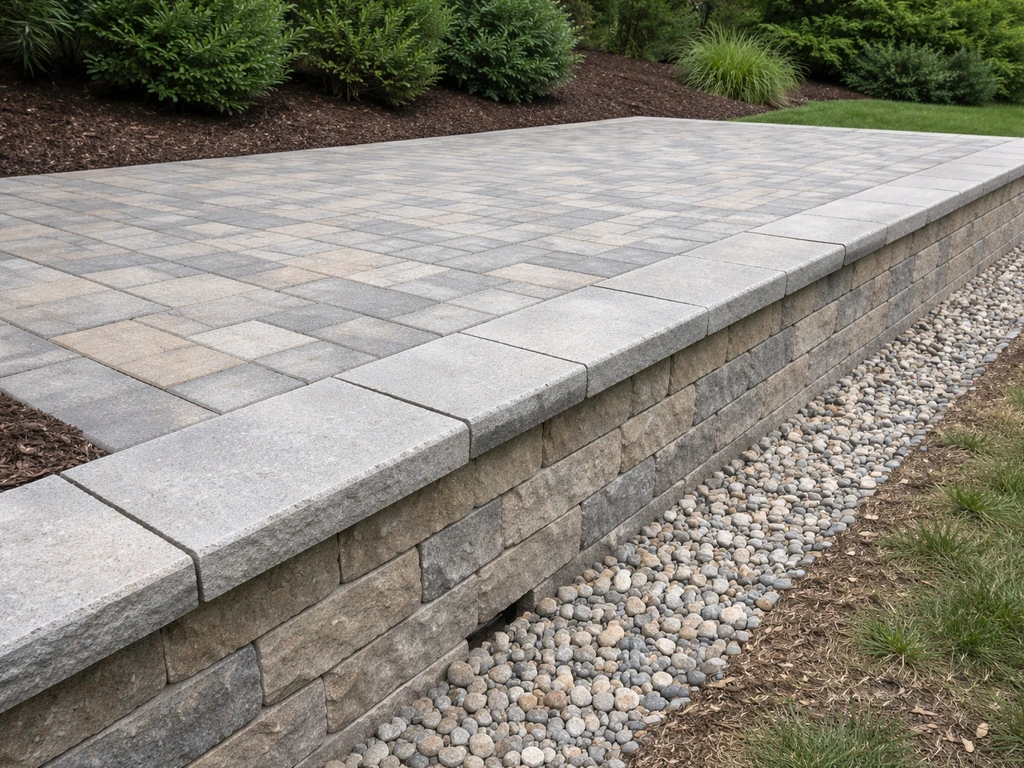
If your wall runs along the edge of your patio and there's a grade transition at one end, consider adding steps rather than forcing people to step up or down onto grass. If you are building patio seating, the wall design, height, and drainage details also need to account for the extra loads and comfort around where people will sit patio seating wall. Steps built from the same block system look intentional and add real usability. The standard comfortable step is about 7 inches tall (two courses of standard block) and at least 12 inches deep. Wider is better: 18 to 24 inches of tread depth feels much more comfortable for an outdoor step.
For the transition between the wall and your patio surface, think about edge treatment. If your patio is pavers, run the last row of pavers up to the face of the wall tightly. If you want a retaining wall with patio on top, edge treatment and expansion details like these help prevent cracking and allow movement between the wall and the patio surface. If it's a poured concrete patio, leave a small expansion gap of about 1/2 inch between the slab and the wall face. The wall and slab will move independently with frost and temperature changes, and a rigid bond between them can crack both. A bead of flexible exterior caulk in that joint looks clean and handles movement.
On the landscape side of the wall (the retained soil), plant low groundcovers or ornamental grasses within a season of finishing. Plant roots help stabilize the retained soil, and greenery draws the eye away from any minor imperfections in the wall face. Mulch the planting bed but keep mulch away from the wall face to avoid moisture retention against the blocks.
If your project grows into something more elaborate, like a raised patio sitting on top of a retaining wall or a wall with a built-in bench along the top, those are closely related builds worth planning at the same time so the structural decisions work together. If you want a built-in bench, use these steps for how to build patio bench so it matches the height and materials of your project.
Common problems, what goes wrong, and when to call a pro
Problems you can prevent or fix
| Problem | Likely Cause | Fix or Prevention |
|---|---|---|
| Wall leaning or bowing outward | Insufficient batter, poor drainage, or inadequate base | Rebuild affected section with proper compacted base; install drainage behind wall |
| Blocks settling unevenly | Inadequate base compaction or soft spots in native soil | Remove blocks, re-excavate, compact more thoroughly, reset blocks |
| Wall tilting forward at base | First course not buried deep enough or base gravel insufficient | Increase burial depth and gravel base depth on next project; may need to rebuild |
| Water pooling behind wall (no outflow) | Missing or clogged drain pipe, no slope to drain | Add perforated pipe with proper slope; clear existing pipe if clogged with soil fines |
| Frost heave cracking or shifting blocks | Wall built on unstable frost-susceptible soil without adequate gravel base below frost line | In cold climates, extend gravel base below local frost depth; ensure good drainage |
| Wall moving after heavy rain | Clay soil backfill retaining water and expanding | Replace native clay backfill with crushed gravel in the drainage zone behind the wall |
When to stop and hire a professional
There are situations where DIY is the wrong call, and recognizing them early saves money and prevents real safety problems. Call a structural engineer or licensed contractor if: your wall will exceed 4 feet in retained height, the soil behind the wall is noticeably unstable, wet, or has a history of movement, there's an existing structure (foundation, driveway, fence) close to the top of the wall that adds surcharge load, you discover unexpected soft spots or buried debris when excavating, or your municipality requires an engineered design for walls over a certain height. A geotechnical assessment costs a few hundred dollars and could save you from a wall collapse that damages property or injures someone. It's not fearmongering, it's just knowing your limits.
Permits are worth a quick check even for small walls. In Oakland, CA, building permits are not needed for retaining walls not over 4 feet in height, unless the wall supports a surcharge or impounds specified liquids Oakland, CA building permits for retaining walls not over 4 feet. Most jurisdictions exempt walls under 4 feet, but some set the limit at 3 feet, and requirements change if the wall is near a property line, an easement, or a steep slope. A permit isn't a bureaucratic hassle so much as a checkpoint that makes sure your approach is safe for your specific site. If your wall ever needs to be sold with the house or repaired after a storm, an unpermitted wall that violates local code can create real headaches.
A note on mortar vs. no-mortar
Most small DIY retaining walls are dry-stacked (no mortar between courses). That's intentional: mortar creates a rigid structure that can crack under the natural movement of retained soil and frost. Dry-stacked segmental block actually performs better for most residential applications because slight flex is absorbed without cracking. If you're thinking about mortaring for a stronger wall, be aware that a poorly mortared wall can actually fail faster than a dry-stacked one, because the mortar cracks and lets water in while still preventing proper drainage. Use construction adhesive for cap blocks only, and leave the rest dry.
FAQ
Can I build a small retaining wall even if my yard behind it is mostly clay?
Yes, but plan for extra drainage performance. Clay holds water, so make sure you use clean, well-compacted drainage gravel behind the blocks, keep the drainage zone at least 12 inches wide, and verify your drain pipe slope is at least 1 inch per 8 feet. If water still pools during rain, consider extending the system to a longer day-light outlet or adding a catch basin rather than relying on weep gaps alone.
Do I really need geotextile fabric if I’m already using crushed stone backfill?
You should still use it. The fabric goes against native soil at the back of the excavation to stop fine particles from migrating into the drainage gravel. Without it, your gravel can gradually “turn to mud,” reducing drainage and eventually increasing hydrostatic pressure against the wall.
What happens if the first course is slightly out of level?
Even small errors compound. A wall that starts off out of level across 20 feet can end up visibly sloped at the cap line and can also shift batter alignment, which affects stability. The fix is to re-level before stacking higher courses, using small adjustments (like coarse sand fine-tuning in low spots) and fully rechecking front-to-back and side-to-side.
How do I know how far down to bury the blocks if I have a sloped yard?
Measure from the bottom of the footing area to the top of the wall along the lowest side, then follow the bury rule of thumb (about one inch buried per foot of exposed height, with at least 6 inches minimum). On sloped sites, trench depth must be consistent along the wall run, so you may need to step the grading and verify with a string line before you place gravel.
Can I make the wall perfectly vertical instead of using the block batter?
Avoid it. Segmental block systems are designed to lean back slightly automatically, and that batter shifts the wall’s center of gravity toward the retained soil. If you force the wall to be vertical, you remove that built-in stability margin and increase the likelihood of movement over time.
Do I need to slope the drain pipe if I’m running it only a short distance?
Yes. Even for short runs, you want a continuous fall toward an outlet. If you can’t achieve the minimum slope to daylight, route to the nearest discharge point that allows correct grade, such as a catch basin, so water does not collect in the pipe and clog faster.
Is it okay to cap the drain pipe ends with plugs or caps?
No. The pipe must discharge water to the outside or into a catch basin. Capping the ends traps water, which defeats the drainage layer and can overwhelm the wall in wet seasons.
How wide should the drainage gravel zone be behind the wall?
For typical small segmental block DIY walls, keep the drainage zone at least 12 inches wide behind the blocks. If your soil is clay or the wall is near a downspout or irrigation area, consider making the drainage zone wider and keeping the lifts well compacted so it stays porous and drains reliably.
Can I use mortared stone or mortared blocks to make the wall stronger?
In most residential retaining wall situations, you should not mortar the block courses. Mortar can crack as the soil moves with freeze-thaw and settlement, and it can also obstruct drainage pathways. The usual approach is dry-stacked blocks, with adhesive used only on the cap units to finish the top.
How do I handle a wall that is taller than 3 to 4 feet or has more than one surcharge source behind it?
Treat it as a non-standard project. If you expect more than about 4 feet of retained height, or there’s a meaningful surcharge like a driveway, deck, or heavy landscaping beds close to the top, pause and consult a structural engineer. The design may require reinforced features, different drainage, or an engineered footing rather than a weekend block layout.
What’s the safest way to transition the retaining wall to a patio surface?
Use an expansion approach so the wall and patio can move independently. For poured concrete, leave about a 1/2 inch gap between the slab and the wall face and fill with flexible exterior caulk. For pavers, bring the last row of pavers tightly to the wall face (and keep the bedding material consistent) so there isn’t a void that settles and creates trip hazards.
Should I plant immediately after the wall is built, and will roots damage the wall?
You can plant right after finishing, but choose low-root varieties and avoid planting directly in the drainage gravel zone. Keep mulch pulled back from the block face so you don’t hold moisture against the wall. Properly drained, planted retained soil generally helps stabilize the slope, but you should avoid deep, aggressive root crops right behind the blocks.
What’s a common mistake that causes early retaining wall failure?
Skipping or weakening compaction, especially at the gravel base and in backfill lifts. Dumping backfill all at once and compacting from the top can create uneven pressure points, which leads to shifting. Follow lift thickness limits, compact in stages, and confirm your base “feels like pavement” before you lay the first course.
Do I need to put the wall on a concrete footing?
Not for typical small DIY segmental block walls, if you built the prescribed compacted gravel base to the right depth. The gravel base functions as a non-settling foundation when trench depth and compaction are correct. If you find soft spots, buried debris, or unexpected unstable soil during excavation, stop and get advice before proceeding.
When is it worth stepping the yard with two shorter walls instead of one taller wall?
Use two shorter walls when the grade change is too large for the DIY height range or when the slope behind the wall would create difficult drainage. Terracing with a flat bench also improves landscaping, and it usually keeps each wall within the “more predictable” height threshold, reducing permit and engineering risk.