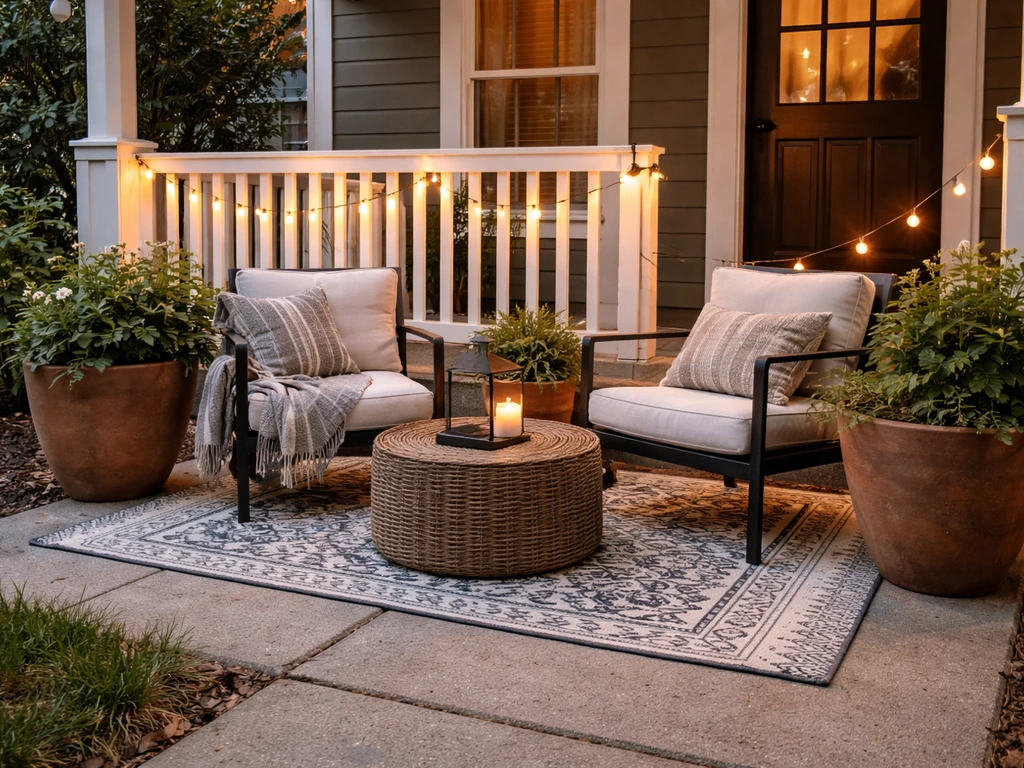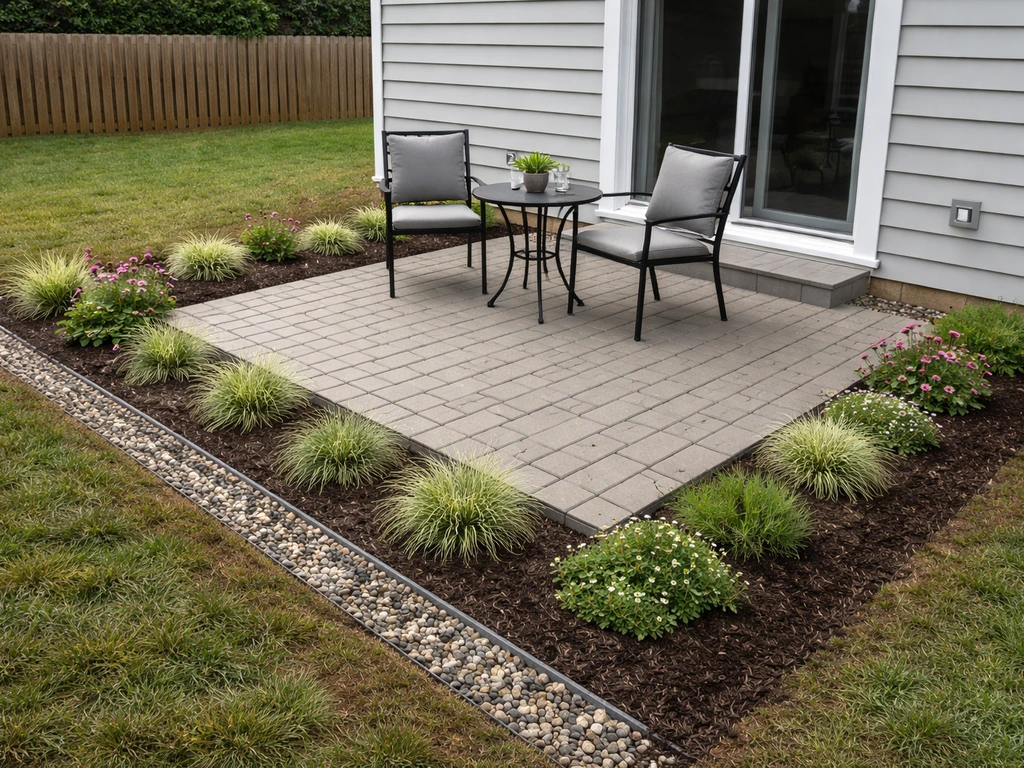
The best way to decorate a large patio is to break it into defined zones first, then furnish and style each zone at the right scale. That single shift, from treating the space as one big blank slab to treating it as several smaller, purposeful areas, solves the empty, awkward feeling that trips up most large patio projects. Once you have zones, everything else (furniture sizing, lighting placement, plant groupings, rugs) has a clear job to do.
How to Decorate a Large Patio: Layout, Lighting, and Shade Tips
Nolan Carver
19 Jun 2026
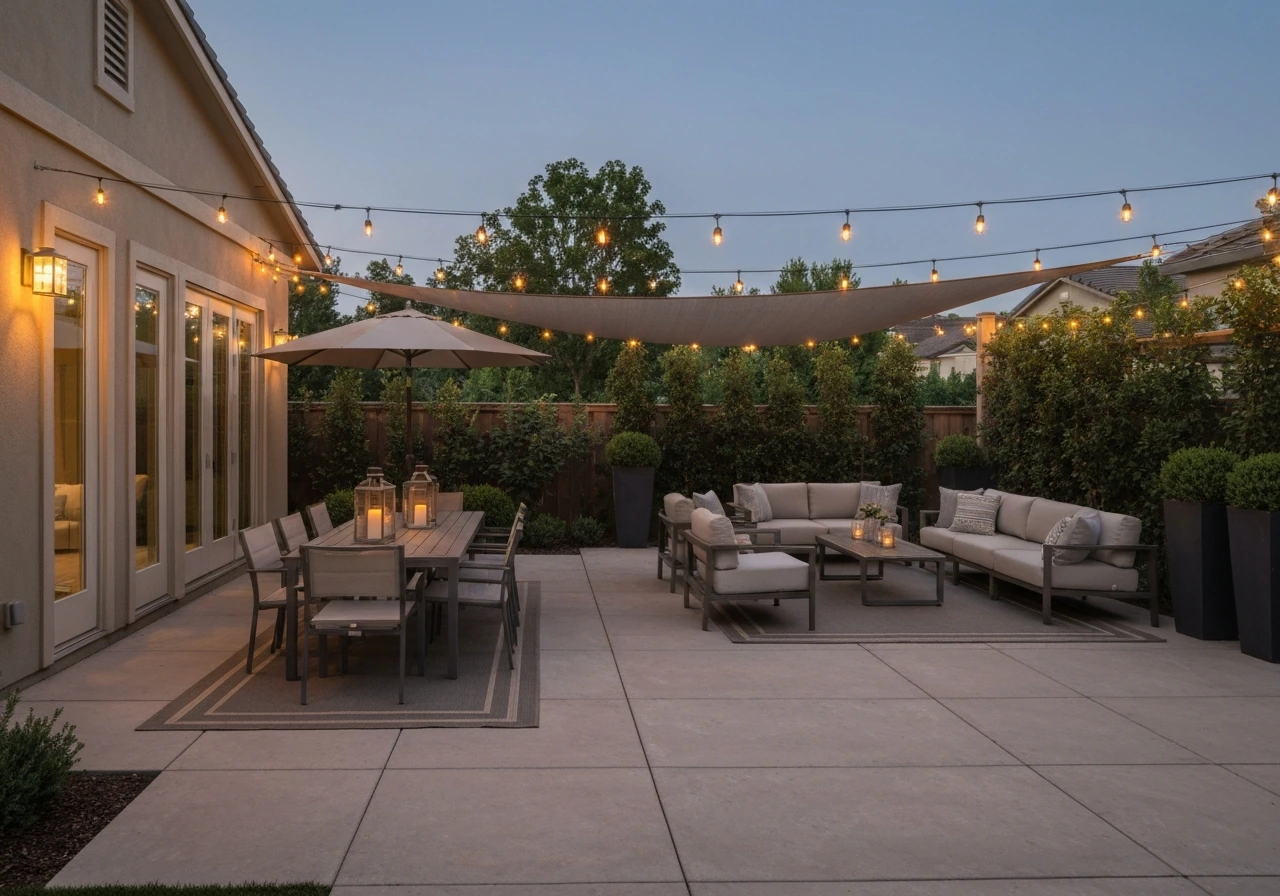
Start with a layout plan: zones, traffic flow, and function
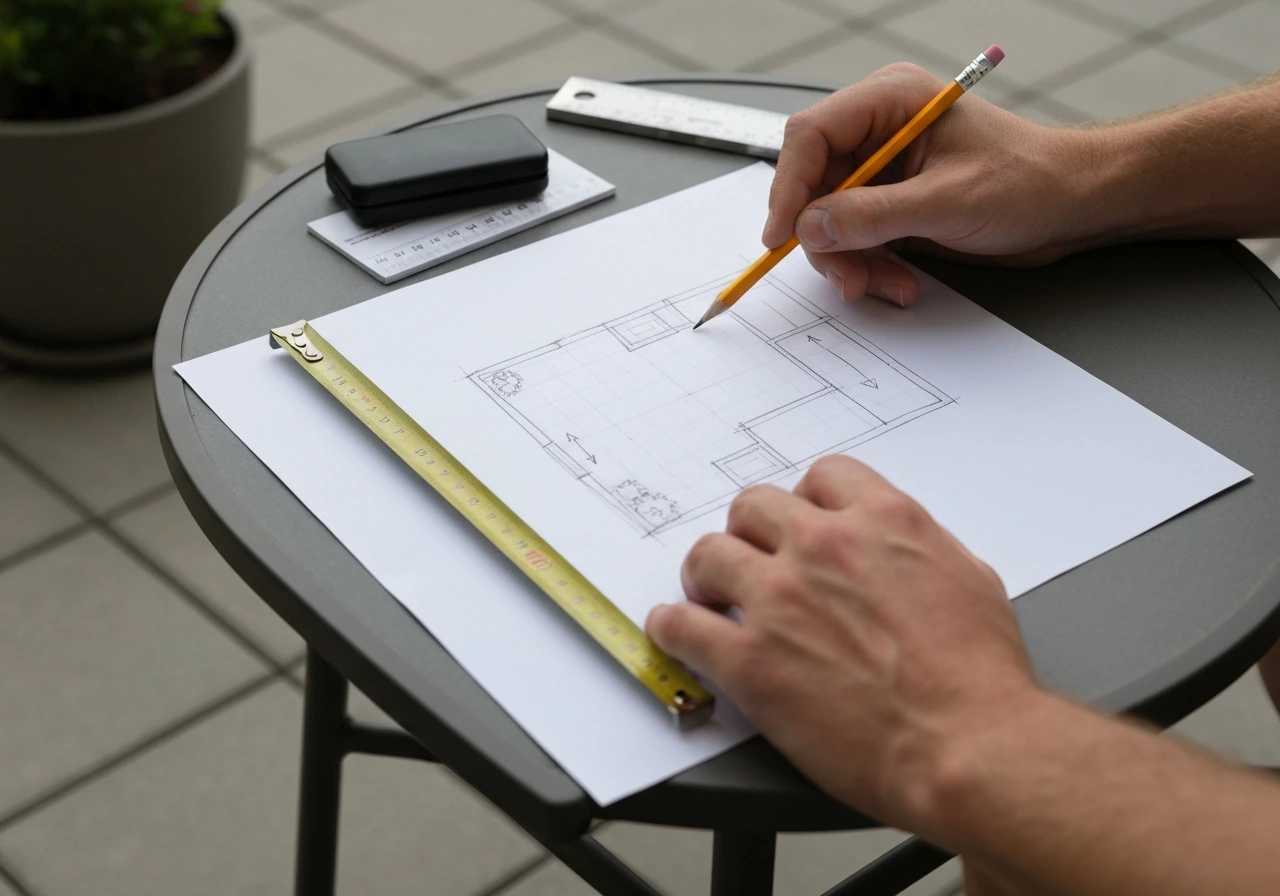
Before you buy a single chair cushion, grab a tape measure and sketch your patio on paper. Write down the actual dimensions. Then mark where every door opens onto the space, where your sightlines land from inside the house, and where shade falls at different times of day. This information drives every decision that follows.
Now decide what the patio needs to do. Once you know what you want each area to do, you can plan how to divide up a large patio into clear zones. Most large patios support at least two or three of the following functions: dining, lounging/conversation, cooking or grilling, a kids' play zone, and a garden or container growing area. Assign each function a rough footprint on your sketch.
A dining zone typically needs a minimum of 10x12 feet to fit a table for six with chairs pulled out. A lounge zone with a sofa, two chairs, and a coffee table comfortably fills a 12x14 foot area. A grill station needs 6 to 8 feet of clear space around it for safety and traffic.
Traffic flow is where a lot of people go wrong. Keep your main walkway paths at least 36 inches wide, that is the minimum for comfortable passage and also aligns with accessibility guidelines for outdoor routes. Access Board guidance on outdoor developed areas says wheelchair access in outdoor settings requires at least [36 inches on all usable sides for clear ground space associated with picnic tables](https://www. access-board.
gov/files/aba/guides/outdoor-guide. pdf), measured from the back edge of seats or benches. The Access Board’s ADA guide for accessible routes specifies a [minimum clear width of 36 inches](https://www. access-board.
gov/ada/guides/chapter-4-accessible-routes/) for clear ground space in ADA outdoor developed areas. Once you nail the layout and traffic flow, you can move on to how to build front patio details like surface choice, steps, and edging. Pinch points narrower than that feel cramped and make the space frustrating to use daily. If someone in your household uses a mobility aid, plan for 48 to 60 inches on primary paths.
Leave clear lanes between the door and each zone so people are not climbing over furniture to get outside.
One honest tip from experience: most people try to push furniture to the perimeter walls and leave a dead open center. Resist that instinct. On a large patio, anchoring furniture groupings toward the middle of each zone, with open lanes around them, actually makes the space feel fuller and more intentional. Walls and perimeter space are for plants, lighting, and vertical décor, not furniture.
If dividing up the space into clear functional areas feels overwhelming, that is a topic worth digging into on its own. Thinking through how to divide up a large patio before you start decorating can save you a lot of repositioning later. Once you have your zones and traffic paths mapped out, the next step is to learn how to fill a large patio with the right furniture, rugs, and spacing.
Pick a style and palette that fits your home and the space
Your patio style should feel like a natural extension of your house, not a separate personality. Walk to the end of your backyard or driveway and look back at the house. Note the exterior colors, the material of the siding or brick, and the architectural style, modern, craftsman, farmhouse, traditional, Mediterranean. That observation gives you your starting palette and style anchor.
For most homes, a three-color outdoor palette works well: one neutral base (think warm gray, natural beige, or off-white for hardscape and large furniture), one dominant accent color (pulled from your exterior trim, door, or landscaping), and one pop color for small accessories and cushions. Keeping it to three colors prevents the scattered, random look that plagues large patios when people shop without a plan.
| Home Style | Suggested Patio Style | Palette Starting Point | Key Materials |
|---|---|---|---|
| Modern/Contemporary | Minimalist outdoor | Charcoal, white, warm wood tones | Concrete, teak, powder-coated steel |
| Craftsman/Bungalow | Relaxed natural | Earthy greens, warm browns, terracotta | Cedar, stone, wicker, linen |
| Farmhouse | Rustic casual | White, navy, warm wood, black accents | Wrought iron, reclaimed wood, galvanized metal |
| Mediterranean/Spanish | Colorful and layered | Cobalt blue, terracotta, cream | Clay tile, wrought iron, mosaic accents |
| Traditional/Colonial | Classic formal | Hunter green, navy, white, brass accents | Teak, wrought iron, classic weave |
One practical shortcut: take a photo of your home's exterior and bring it to the paint or outdoor décor store. Hold cushion swatches and fabric samples next to it. What looks cohesive in the photo will look cohesive on the patio. It sounds simple, but most decorating missteps happen when people shop from memory instead of reference.
Choose furniture and rugs at the right scale
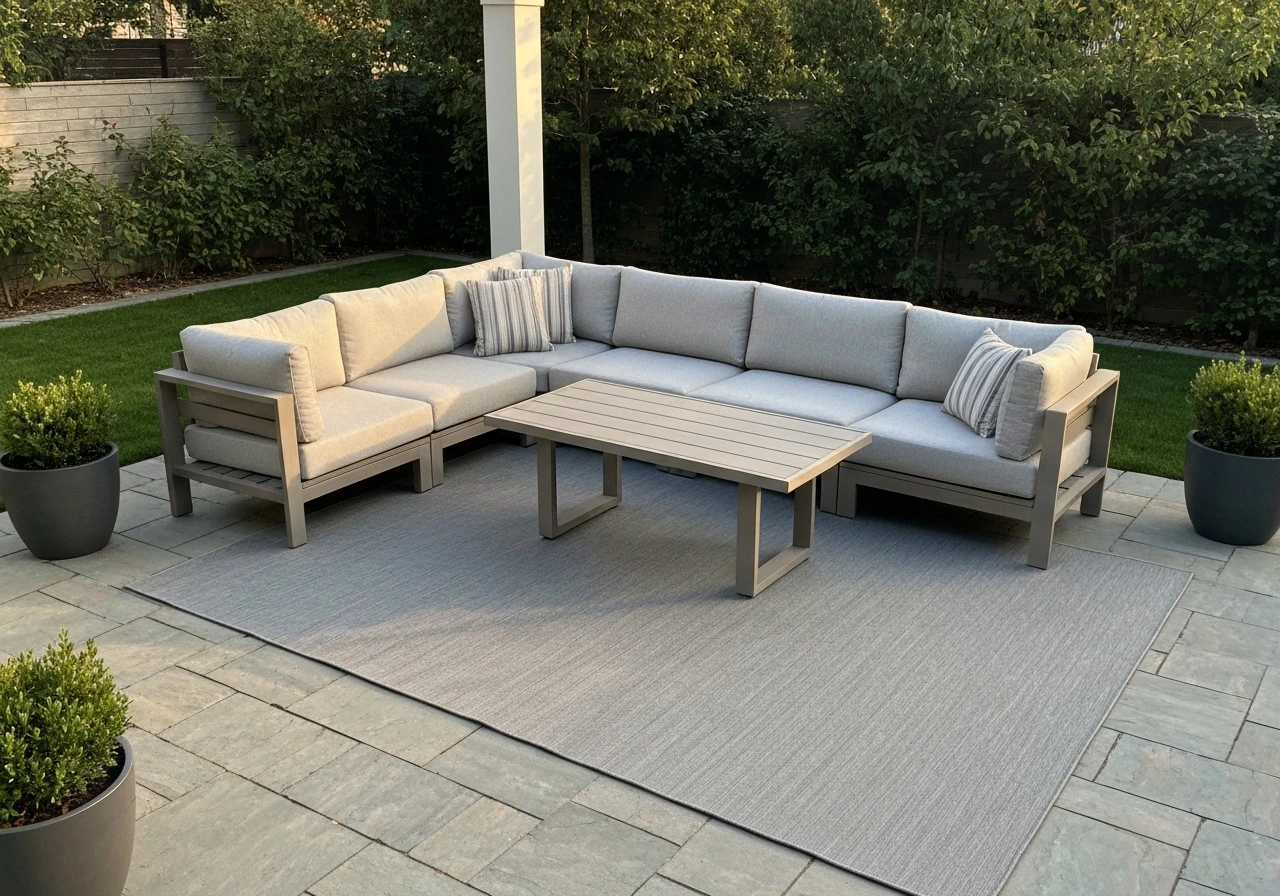
Scale is the biggest decorating challenge on a large patio. Standard residential outdoor furniture is sized for a 10x12 foot deck. On a 400 or 600 square foot patio, that same set disappears. You need to go bigger, layer in more pieces, or both.
Furniture sizing guidelines for large patios
- Dining tables: Go for a 72- to 96-inch rectangular table (seats 6 to 10) rather than a standard 60-inch round. Larger tables anchor the zone visually.
- Sofas: An outdoor sectional (100 to 120 inches on the long side) fills a lounge zone proportionally. A standard loveseat (52 to 60 inches) looks like doll furniture on a large patio.
- Lounge chairs: Use two to four chairs per seating cluster rather than a single pair — large spaces need more mass.
- Side and coffee tables: Go oversized. A 48- to 54-inch square coffee table reads at the right scale in a large lounge grouping.
- Dining chairs: Pair a large table with armchairs rather than standard side chairs — the extra visual weight helps fill the zone.
Outdoor rugs: how big is big enough?
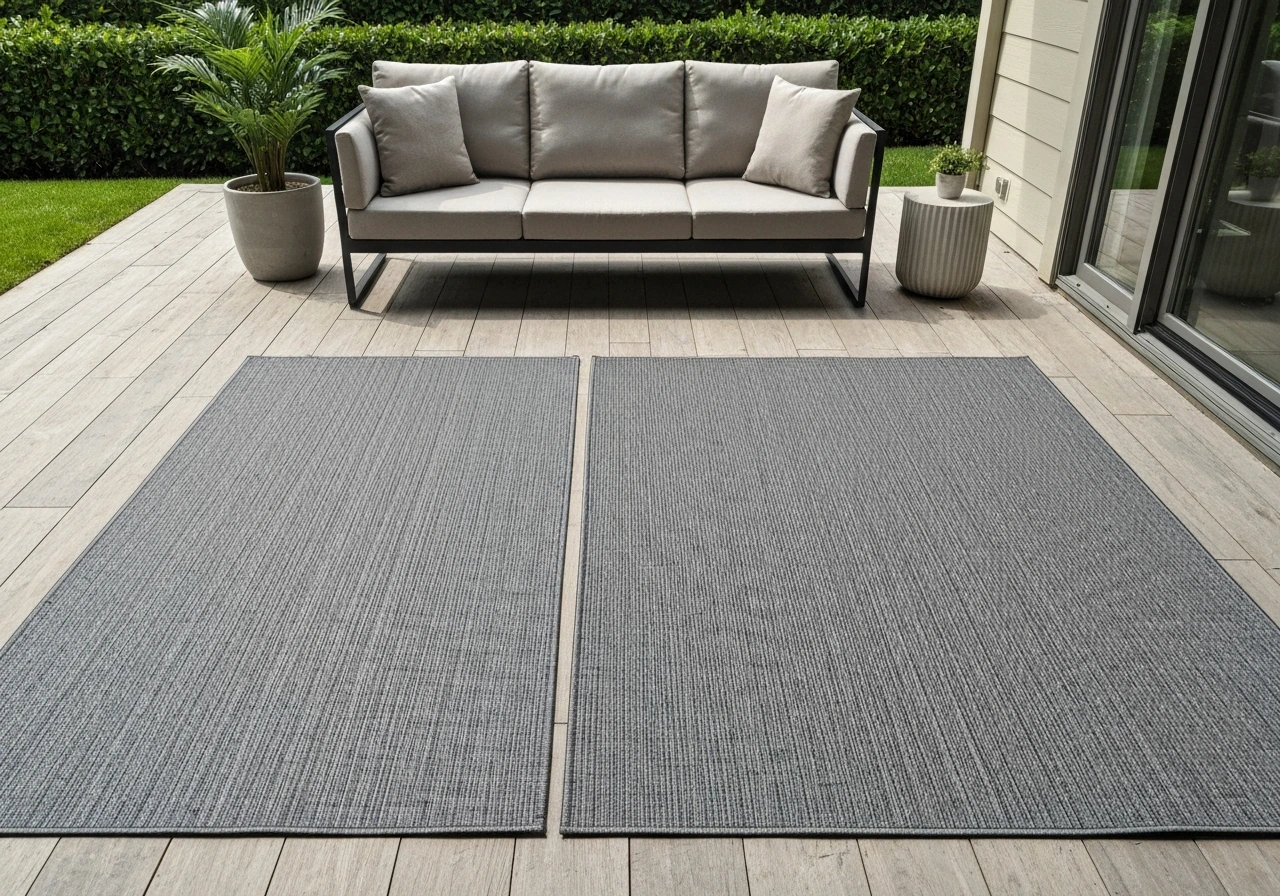
Outdoor rugs are what tie a furniture grouping together and signal to the eye that this is a distinct zone. The most common mistake is going too small. An 8x10 rug can work under a conversation set of four pieces if all legs land on or just inside the rug edge, but on a large patio that same rug will usually look like a postage stamp. For a generous lounge area, a 9x12 or 10x14 rug is usually the minimum.
For a dining zone with a large table, size up so all chair legs stay on the rug even when pushed out, that typically means a 9x12 or larger. If you are unsure, use painter's tape or a garden hose to outline the rug shape on the patio before you buy. Walk around it. Sit in the furniture positions.
Adjust until it feels right, then measure.
For outdoor rugs specifically, polypropylene is the material to default to. It handles UV, moisture, and mildew better than most natural fiber rugs, it is easy to hose off, and it holds color well. Flatweave or low-pile polypropylene rugs also resist wind better than high-pile options, which matters more than most people expect on a large open patio.
Lighting, privacy, and shade: making the space work all day
A large patio that is blazing hot by noon and pitch dark by 8 p.m. does not get used. Solving for shade and lighting is not optional, it is what converts a decorating project into a space you actually live in.
Shade options and where they work best
| Shade Option | Best For | Typical Coverage | Notes |
|---|---|---|---|
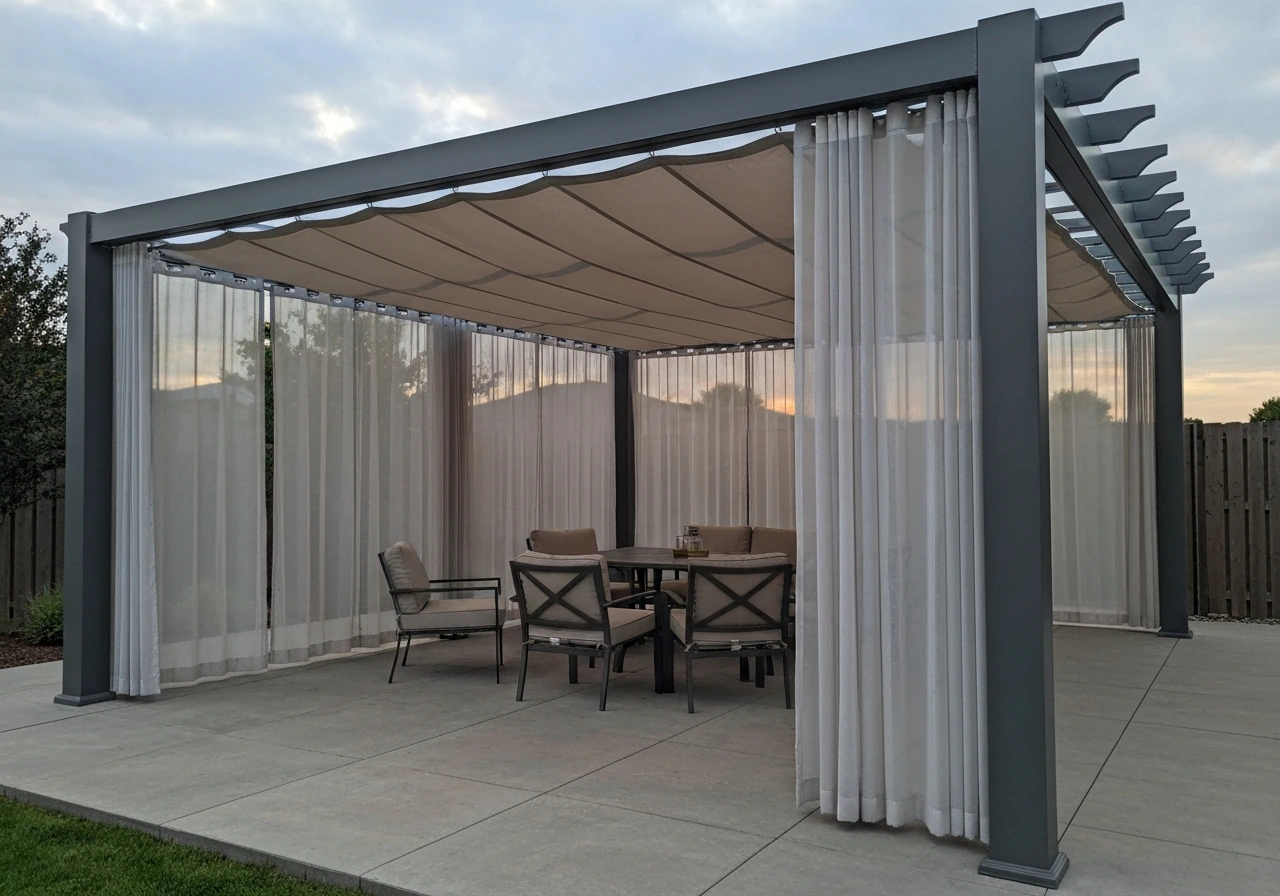
| Pergola with shade sail or curtains | Lounge and dining zones | 12x16 ft and up | Semi-permanent, adds structure, great anchor for lighting |
| Large offset cantilever umbrella | Dining zone or lounge grouping | 10 to 13 ft diameter | Flexible, moves with sun; needs a weighted base on large patios |
| Standard market umbrella | Dining tables | 7.5 to 9 ft diameter | Works for smaller dining zones; too small for large lounge areas |
| Shade sail (fabric triangle or rectangle) | Irregular coverage zones | 12 to 20 ft per panel | Attach to posts or house; multiple panels can cover large areas affordably |
| Retractable awning | Adjacent to house, over primary seating | Up to 20 ft wide | Higher cost, most weather control, requires mounting surface |
Lighting layers that work on a large patio
Think in three layers: ambient (overall illumination), task (dining table, grill area), and accent (plants, architectural features, pathways). String lights are the workhorse of patio ambient lighting, a 48-foot strand of commercial-grade outdoor string lights hung at 8 to 9 feet high covers most lounge or dining zones well, and they are inexpensive enough to layer across multiple zones.
For task lighting over a dining table, a hardwired or solar-powered outdoor pendant or lantern hung from a pergola beam gives you focused light exactly where you need it. At ground level, solar-powered pathway stakes or low-voltage landscape lighting along the patio edge define the border and add depth. Candles and lanterns on tables and surfaces add warmth and are easy to move around.
Privacy solutions
Large patios are often more exposed than small ones, especially if they are elevated or lack perimeter landscaping. Outdoor privacy screens (bamboo, metal lattice, or composite panels) can be freestanding or post-mounted and used to screen a lounge zone from neighbors or a road. Tall container plants, columnar evergreens, ornamental grasses in large pots, or bamboo in planter boxes, create a softer, more natural privacy screen along exposed edges. Outdoor curtain panels hung from a pergola beam are another option: they add both privacy and a design element, and they are adjustable.
Décor ideas that actually hold up outdoors
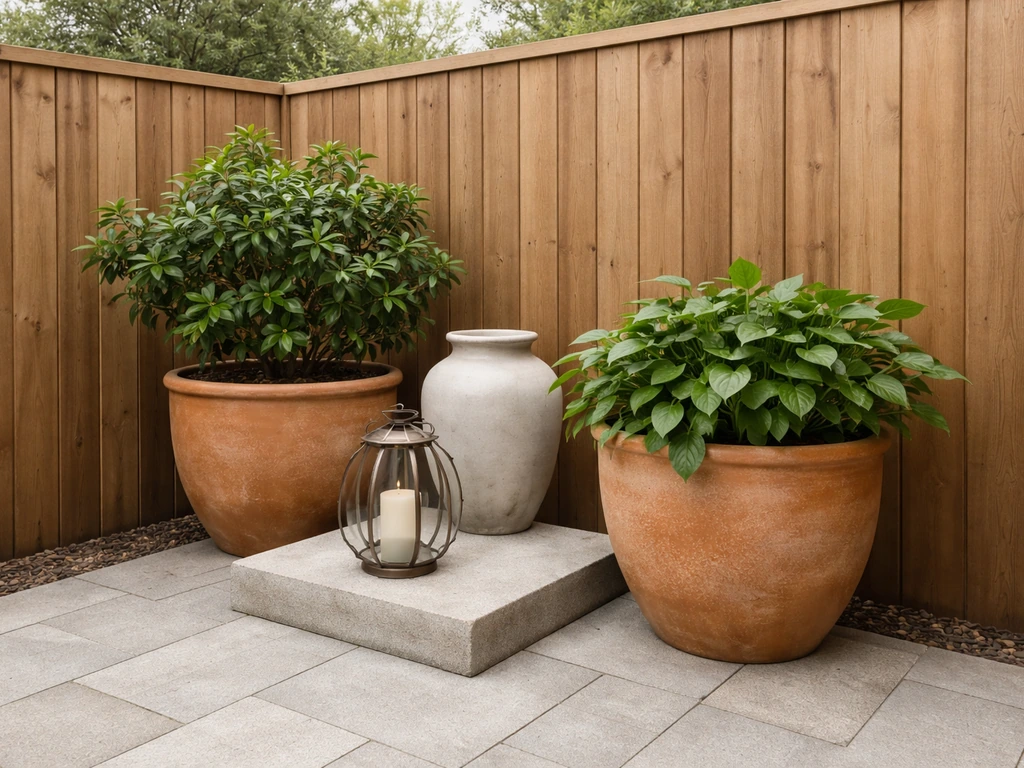
Outdoor décor has one job beyond looking good: surviving the weather. Everything you put on a large patio needs to handle UV exposure, moisture, temperature swings, and wind. Here is how to approach each category with that filter in mind.
Plants and containers
Plants are the fastest way to make a large patio feel alive and not like an empty concrete slab. The key is using large containers and grouping them rather than scattering small pots randomly. A cluster of three containers in different heights (say, 18, 24, and 30 inches tall) reads as a single design statement. Use at least one container that is 20 to 24 inches in diameter for the anchor of each grouping, anything smaller than that disappears on a large patio. Good structural plants for outdoor containers include ornamental grasses, agave, salvia, boxwood, and dwarf citrus. Trailing plants like sweet potato vine or creeping Jenny add softness and fill vertical space.
Material matters for containers too. Lightweight fiberglass planters look like concrete or terracotta but will not crack in freeze-thaw cycles and are much easier to move. Genuine terracotta is beautiful but requires drainage planning and can crack in freezing temperatures. Glazed ceramic is durable but heavy, fine if the pots are staying put.
Textiles: cushions, throw pillows, and outdoor curtains
Textiles bring color, softness, and comfort to outdoor furniture that would otherwise feel stiff and utilitarian. Look for fabrics rated for outdoor use, Sunbrella is the gold standard for UV and moisture resistance, but there are solid budget alternatives made from solution-dyed acrylic or polyester. Avoid indoor throw pillows on outdoor furniture even for occasional use, they absorb moisture, grow mold quickly, and fade within a season. Buy outdoor-rated from the start and you will not be replacing cushions every year. Stick to your three-color palette when choosing textiles: neutral cushion bases with patterned or colored pillow covers give you flexibility to update the look seasonally without replacing everything.
Wall and vertical décor
Vertical surfaces are underused on most patios, and they are prime real estate on a large space. Options include: weather-resistant wall art (powder-coated metal is the most durable), a vertical planter or trellis with climbing plants, an outdoor mirror (acrylic or powder-coated aluminum frame only, not standard glass mirrors, which can crack and shatter in temperature extremes), and a decorative screen or panel that doubles as a privacy element. If your patio is attached to the house, the exterior wall is often the most prominent vertical surface, treating it with a string of outdoor sconces, a mounted planter system, or a large piece of outdoor art makes a significant impact.
Accent pieces and finishing details
Outdoor lanterns, fire pits, decorative trays on coffee tables, and sculptural objects fill in the layers that make a patio feel styled rather than just furnished. A portable propane fire pit or a wood-burning fire bowl makes an immediate focal point in a lounge zone and extends the usable season by weeks. Outdoor-rated candle lanterns (galvanized metal or powder-coated steel) add warmth at table level. A decorative tray on a coffee table corrals remote controls, sunscreen, and small accessories while looking intentional. None of these items need to be expensive, but they need to be weather-rated or easy to carry inside when conditions change.
Finishing touches, weather durability, and keeping it looking good
Even the best outdoor décor needs basic maintenance to last. Building that into your plan from the start is what separates a patio that still looks great in year three from one that looks tired by year two.
Material durability at a glance
| Material | Durability Rating | Maintenance Needed | Budget Level |
|---|---|---|---|
| Powder-coated aluminum furniture | Excellent (10+ years) | Annual rinse, check for chips | Mid to high |
| Teak wood furniture | Excellent (15+ years) | Annual teak oil or let silver naturally | High |
| All-weather wicker (resin) | Good (5-8 years) | Rinse seasonally, cover in winter | Mid |
| Wrought iron furniture | Good if maintained (8-12 years) | Touch up rust spots, season with oil | Mid |
| Polypropylene outdoor rug | Good (3-5 years) | Hose off monthly, dry fully | Low to mid |
| Sunbrella or solution-dyed acrylic fabric | Excellent (5-10 years) | Spot clean, store covers in off-season | Mid to high |
| Concrete or ceramic planters | Good (varies by climate) | Drain well, bring in before freeze | Low to mid |
| Fiberglass planters | Excellent (10+ years) | Rinse seasonally | Mid |
Seasonal maintenance habits that protect your investment
- At the start of each season: inspect all furniture for rust, loose hardware, cracked welds, or faded fabric. Tighten bolts, touch up paint chips with rust-inhibiting paint, and replace any cracked or broken pieces before they worsen.
- Monthly during the season: hose off outdoor rugs and let them dry fully before replacing furniture on top. Mold and mildew grow under rugs when moisture gets trapped — lifting and hosing takes ten minutes and prevents a bigger problem.
- Before storms or high-wind events: bring in cushions, throw pillows, and lightweight accessories. Anchor or store umbrellas. Even heavy furniture can shift or tip in strong wind on an open large patio.
- At end of season (if applicable to your climate): store cushions and textiles indoors or in a weatherproof storage box. Cover furniture with breathable covers rather than plastic tarps, which trap condensation. Bring in any terracotta or ceramic pots before the first freeze.
- Once a year: apply UV-protectant spray to fading fabric, reapply teak oil to wood furniture, and clean string light connectors to prevent corrosion.
Your action checklist for getting started
If this all feels like a lot at once, here is a practical order of operations. Do the layout plan and zone sketch first, it costs nothing and determines everything else. Then prioritize the structural items: shade, seating, and a dining surface if you use yours for meals. Add an outdoor rug per zone to anchor the furniture. Then layer in lighting, plants, and textiles. Accent pieces and wall décor come last. You can add those gradually over time without the space feeling unfinished, as long as the structure and scale are right from the beginning.
Budget realistically: a large patio with two well-furnished zones (dining plus lounge) and basic lighting typically runs $1,500 to $5,000 for quality furniture and rugs alone, more if you add a pergola or shade structure. But you do not have to do it all at once. Getting the dining zone done this season and the lounge zone next season is a completely valid approach, and it is easier to make good choices when you are not trying to solve everything at once. The main thing is not to buy small, cheap pieces to fill the space quickly, undersized furniture on a large patio always looks worse than an incomplete space in progress.
FAQ
How do I choose the right outdoor rug size for a large patio without guessing?
For a patio rug, start with the “all chair legs on the rug” rule for dining. Measure the table footprint with chairs pulled out, then plan the rug so it extends beyond the furthest chair leg by about 6 to 12 inches. For lounge seating, make sure the front legs of the seating pieces land on the rug, so the grouping reads as one zone instead of floating.
Can I cover outdoor furniture and textiles instead of replacing them every season?
Yes, but only if you can control water. Use materials that resist mildew and keep airflow, for example outdoor-rated textiles and breathable cushions, then choose a cover that fits tightly and lets moisture escape when dry. If you live in a humid or rainy area, plan to remove cushions occasionally and dry them, otherwise covers can trap moisture and lead to odor or mold.
What should I do if my large patio is in full sun all day?
If your patio has little to no shade, prioritize overhead and partial shade before you focus on decor. A practical approach is to install a pergola or shade sail over the main lounge or dining zone, and then use wind-rated umbrella options only if your area is stable. Also choose lighter-colored cushions and rugs that do not absorb as much heat, and consider reflective hardscape or outdoor-rated shade fabrics.
How can I prevent awkward traffic flow once I actually start decorating?
Assume your main walkway paths will get used more than you think during daily life, even if you “designed” for a single walkway. If you have doors opening into the patio, add at least one clear lane from each door to the closest zone, and avoid placing the tallest furniture or planters in the middle of turns. Mark these routes on your sketch, then check them while walking outside as if you were carrying items from the door.
What planter sizes and grouping methods work best on a large patio?
When selecting planters, match the container size to the mature plant, not the nursery size. As a rule, small pots on a large patio look temporary and visually shrink. Group containers in odd numbers (three works best) and include at least one “anchor” pot large enough to read from the far viewing distance, then stack heights to create a layered backdrop for the seating.
How do I add privacy to a large open patio without creating wind or maintenance problems?
Do a wind test before committing to tall privacy elements. Set up temporary stakes or repurpose lightweight panels in the intended area, then watch how they behave on breezy days and during storms. For freestanding privacy screens, consider anchoring methods appropriate to your flooring type (pavers, concrete, or soil), and keep tall plants from blocking your main light sources.
What is the easiest lighting plan if I want the patio to feel usable at night?
Outdoor lighting should be spaced for coverage, not for brightness at one point. Use string lights across the lounge or dining area for ambient fill, then add task lighting directly over dining and grill areas. Finally, include low-level path or edge lighting so you can navigate safely at night, especially in areas without garden borders or steps.
Are fire pits and candles a safe choice for a large patio setup?
Start with a weather-proof surface strategy. If you want a fire feature, check local clearance rules and ensure you have a noncombustible zone around it, then keep flammables such as cushions, planters, and wall décor a safe distance away. Also plan for ventilation, smoke direction, and easy refueling or access if it is wood-burning.
How do I decorate a large patio if everything keeps looking flat?
A common “large patio mistake” is ignoring height. Add vertical interest with trellises, wall art, mounted planters, columnar plants, or hanging planters so the space does not feel like only floor-level pieces. Even a few tall elements placed at the edges of each zone help the whole patio read as intentional and complete.
How can I change the patio look seasonally without starting over every year?
Design in seasons using replacement logic. Pick a base palette of materials and colors that you will keep, then swap only the parts that change easily, such as cushion covers, small accessories, and seasonal planters. Choose outdoor-rated fabrics from the start, and store them properly when severe weather hits to extend their lifespan.